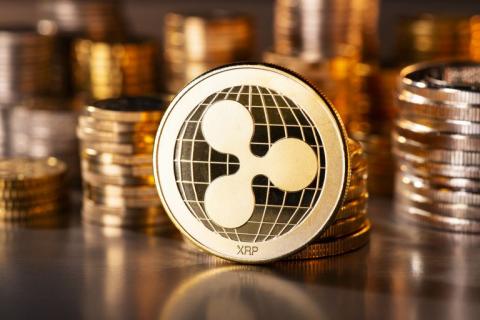
Ripple is both a platform used for the peer-to-peer transfer of currencies (RippleNet), and a digital currency (ripple XRP). The platform itself is an open source protocol, designed to enable fast and cheap transactions between two parties. Any type of currency can be exchanged on the platform, from fiat currencies such as sterling, to cryptocurrencies, to air miles.
The ripple token (XRP) itself can be used on the platform, and is required to facilitate transactions on ripple. However, the standard transaction cost is around 0.00001 XRP, which is minimal compared fees from conventional banks. Ripple is also interchangeable with any currency or digital asset on its platform. Therefore, the key selling point of ripple is not in the XRP token, but in the network itself and its ability to transfer assets quickly around the world. The network operates as a competitor to existing payment systems, such as Swift. It can facilitate a variety of transfers across RippleNet, rather than acting as a replacement for existing payment methods or a direct competitor to fiat currencies, as other cryptocurrencies such as bitcoin aim to do.
The idea of ripple was first considered in 2004, but it wasn’t until 2013 that it gathered more traction. Jed McCaleb (a well-known programmer and entrepreneur, and one of the co-founders of ripple) invited a group of investors to invest in the network. Chris Larsen was one of these angel investors, and is considered to be one of the richest people involved in cryptocurrencies.

What is ripple used for?
Banks and individuals are able to use ripple software to exchange assets. Currently, this is done using Swift, a system which relies on banks having separate accounts in all the countries they operate in.
Ripple offers an alternative with some benefits. For example, it could offer low commission currency exchange. At present, there are many currencies that can’t be directly converted to another, so banks need to use US dollars as a mediator. This results in double commission. Ripple could also be used as a mediator currency, but it is much cheaper than USD. It also offers much quicker international transactions than other, similar alternatives. The average transaction time on the ripple platform is four seconds, in comparison to around 10 minutes for bitcoin, or what can be up to a few days for traditional banking systems.
Xcurrent is ripple’s existing service, offering an alternative to what many see as Swift’s archaic messaging system. Xcurrent is aimed specifically at banks and other financial institutions to offer a quicker and more efficient solution to cross-border payments.
A recent innovation constantly linked with various financial institutions and service companies is Xrapid. The price of ripple rallied strongly at the end of September 2018, following rumours of links to this new service. Xrapid works by enabling payment providers and banks to connect different currencies around the world using XRP as a bridge asset, thus processing cross-border transactions faster than ever.
Buying vs trading ripple
When buying ripple, you are required to use a cryptocurrency specialist to trade and store ripple. These online ‘hot wallets’ are prone to hackers and the only way to avoid this is to purchase ‘cold wallet storage’ which is essentially a USB stick to store ripple coins. These cold wallets require an initial investment to purchase the wallet and the storage process is often complicated.
However, when trading ripple with a leveraged trading broker you do not need to worry about exchanges or hot and cold wallets, as you do not own the underlying asset. Learn about the regulations we adhere to and note how these are different from exchanges when trading or buying ripple and other cryptocurrencies.
Benefits of trading cryptos
- The ability to short (‘sell’). Spread betting and CFD trading allows professional clients only to trade on both rising and falling prices. You don’t have to own a cryptocurrency in order to sell it (go short), something that is not possible on cryptocurrency exchanges.
- Efficient use of capital. Leveraged trading means you only need to deposit a percentage of the full value of a trade in order to open a position. With cryptocurrency exchanges, you would need to deposit the full value of the contract. Remember that both profits and losses will be magnified by your leverage ratio and you could lose more than the amount you deposit to open a position.
- No exchange account or wallet needed. There is no need to open an exchange account or wallet to hold cryptocurrency. This means no waiting for approval from the exchange, no concerns about keeping your wallet secure and no fees if you want to withdraw funds later.
- Trade with an established provider. CMC Markets is a regulated provider. We have over 30 years’ experience in the industry and offer award winning customer service^ and support for all our clients whenever the markets are open.
- Responsible trading. Cryptocurrencies are still relatively new for most people and can be extremely volatile. We provide all of our clients with access to in-depth educational materials to support their trading.
Risks of trading cryptos
- Highly volatile.Cryptos are a highly volatile asset which can see large price increases or decreases in a matter of minutes.
- Large loss potential.As a direct result of its volatility, trading cryptocurrencies can result in large profits or losses.
Where can I trade cryptos?
Cryptocurrencies can be traded, bought and sold. There are various methods of trading ripple, some of which are more advantageous for specific types of traders.
Ripple exchange
When you buy ripple on an exchange, the price of one XRP token is usually quoted against the US dollar (USD). In other words, you are selling USD in order to buy ripple. If the price of ripple rises you will be able to sell for a profit, because it is now worth more USD than when you bought it. If the price falls and you decide to sell, then you would make a loss.
Ripple exchanges require you to purchase and thus, own the asset. This means you have to rely on liquidity to trade the markets, but still, profits or losses are made in relation to ripple’s price movements.
Can you trade ripple with CMC Markets?
Ripple is not currently available to trade with us via a spread betting or CFD trading account. However, professional clients can trade from 14 cryptocurrency instruments with us. This allows you to speculate on its price movements without owning the actual cryptocurrency. You open a position which will increase or decrease in value depending on the instrument’s price movement against the dollar.
Spread betting and CFDs are leveraged products. This means you only need to deposit a percentage of the full value of a trade in order to open a position. You won’t have to tie up all your capital in one go by buying outright. Instead, you can gain full exposure to a trade by depositing a percentage of the full trade value. While leveraged trading allows you to magnify your returns, losses will also be magnified as they are based on the positions full value.
Spread betting cryptos
Spread betting cryptos has the advantage of being the most tax-efficient method of trading, as it's exempt from capital gains tax**, however it's only available in the UK and Ireland. When you spread bet you do not own the underlying asset, but you will still make profit or losses relative to your trade’s exposure.
Cryptos CFD trading
As it's available globally, trading cryptos with a CFD trading account is perhaps the most popular method other than using an exchange. Unlike exchanges, when CFD trading you do not own the underlying asset. Instead, you lay a small portion of the full trade value in order to start making profit or losses relative to the full trade value. This provides the benefit of being able to diversify your trades as your initial lay of capital is not comparable to exchanges.

How to trade cryptos
- Open a trading account. Your first step towards trading cryptos is to open a leveraged trading account. Ripple trading is only available for professional clients, so visit our CMC Pro page to check the criteria and see if you are eligible for a pro account. Please note: losses can exceed deposits and retail investor protections do not apply.
- Build a trading strategy.Development of a trading plan is key to trading any market, as it helps you to minimise the risks of trading, and provides consistency within your trades. See how to create a trading strategy template for some assistance on building a plan.
- Research and analyse.Undertake thorough research if you're trading based on fundamental analysis, or analyse the relevant crypto trading chart if you're using a technical analysis-based research method. What direction do you think the market is heading in and why?
- Go long and open a position to ‘buy’ or go short and ‘sell’.Does your research suggest the price will fall? Go short (sell). Think the market will rise in value? Go long and ‘buy’.
- Place a trade. Once you have decided to ‘buy’ or ‘sell’, enter your position size to place a trade. Consider risk-management orders such as take-profit and stop-loss orders.
- Monitor your position. Keep an eye on your position and close your trade as outlined in your trading plan, if this is not already executed by your risk management conditions.
Ripple vs bitcoin
There are several differences between ripple and bitcoin; perhaps the most relevant is their intended use. Ripple was developed to settle payments and exchange currencies for banks and other financial institutions. The key principle of ripple is to tackle conventional payment methods such as SWIFT, and provide a system to transfer assets globally, that is cheaper, more secure and faster. Whereas, Bitcoin was developed solely as a digital currency to provide in turn for the exchange of goods and services. Some other differences between the two include:
- Technology: bitcoin is based on blockchain technology, where a public record of verified transactions is recorded. Ripple, on the other hand, does not use blockchain technology, but instead uses its own technology known as the ripple protocol consensus algorithm (RPCA).
- Mining: miners are used to verify bitcoin transactions, and also to issue new bitcoins into the network. Instead of mining, ripple uses a unique distributed consensus mechanism through a network of servers to validate transactions, and all of its XRP tokens are pre-mined.
- Transaction times: ripple is able to handle 1,500 transactions per second, and scale up to 50,000 transactions per second, similar to Visa for example. Comparatively, bitcoin only has a transaction speed of three to six transactions per second.
- Supply: Bitcoin has a total supply of 21 million coins, whereas ripple has 100 billion pre-mined tokens.
Ripple and blockchain technology
Ripple, unlike bitcoin, does not use blockchain technology. Bitcoin transactions are validated by miners, and then added to the existing blockchain. Ripple also uses validating servers and a consensus mechanism, but via its own patented technology, the ripple protocol consensus algorithm (RPCA). The word ‘consensus’ in the name refers to the fact that if every node is in agreement with the rest, it will be validated.
What factors affect ripple’s price?
Like all markets, the forces of supply and demand are the sole factors that can appreciate the price of some coins and diminish the value of others. However, various macro-economic factors can influence the price of ripple. These include but are not limited to:
- Regulation. Many cryptocurrencies are currently unregulated by governments and central banks. If this changes in the future, ripple’s value could be affected.
- Technology. Ripple’s underlying technology as a platform for international transactions is what makes it different to other cryptocurrencies. Several large banks have announced testing of ripple’s technology and successes or failures of these tests could affect its price in the future.
- Press and public perception. Positive media interest and coverage of ripple’s technology is likely to have a correlated positive effect on its value. Similarly, negative press and public perception could devalue ripple. See our news & analysis section to stay up to date with market moving news on ripple, cryptocurrencies and other assets.
- Relevancy. Ripple’s price could be impacted if cryptocurrencies become more or less relevant to the banking industries in the future. This follows the general logic that a more relevant product will be more in demand and command a higher price.
- Other cryptocurrencies. The cryptocurrency market seems to follow a similar trend and bitcoin seems to be leading the way. Changes in the market sentiment of bitcoin can have substantial influence over other alternative cryptocurrencies like ripple.
Cryptos trading platform
Our award-winning online trading platform, Next Generation, comes complete with built-in trading charts, price projection tools and technical indicators. It can be used by traders of all experience levels, whether professional or beginner. We also offer trading on the MetaTrader 4 platform.
Read about the differences between Next Generation and MT4.
Test drive our trading platform with a practice accountExperience our powerful online platform with pattern recognition scanner, price alerts and module linking.
- Fill in our short form and start trading
- Explore our intuitive trading platform
- Trade the markets risk-free
Start trading on a demo account
*Please note we may, at our sole discretion, restrict your ability to go short.
** Tax treatment depends on individual circumstances and can change or may differ in a jurisdiction other than the UK.
^ Awarded Best Platform Features, Best Mobile Phone/Tablet App, ranked highest for Charting and Spreads, based on highest user satisfaction among spread betters, CFD and FX traders, Investment Trends 2018 UK Leverage.
Disclaimer
CMC Markets is an execution-only service provider. The material (whether or not it states any opinions) is for general information purposes only, and does not take into account your personal circumstances or objectives. Nothing in this material is (or should be considered to be) financial, investment or other advice on which reliance should be placed. No opinion given in the material constitutes a recommendation by CMC Markets or the author that any particular investment, security, transaction or investment strategy is suitable for any specific person.